How does tree of heaven care for us?
Known as the tree of heaven, Ailanthus is written about in the oldest Chinese dictionary. They came to the United States in 1874 at time when landscape designers were entranced with Asian culture, but by the turn of the century when it became clear how quickly they spread and how the ailanthone in their bark and roots inhibits the growth of other species, they began to be labelled a foreigner, an invader, linking plants to borders and immigration policies. But they are incredibly tough; they can provide erosion control along the banks of highways, they can provide shade in urban areas lacking much tree canopy, they are not particularly affected by pollution, and they can grow amazingly quickly. They are also known as the stink tree because of the smell, of their flowers which humans find noxious.
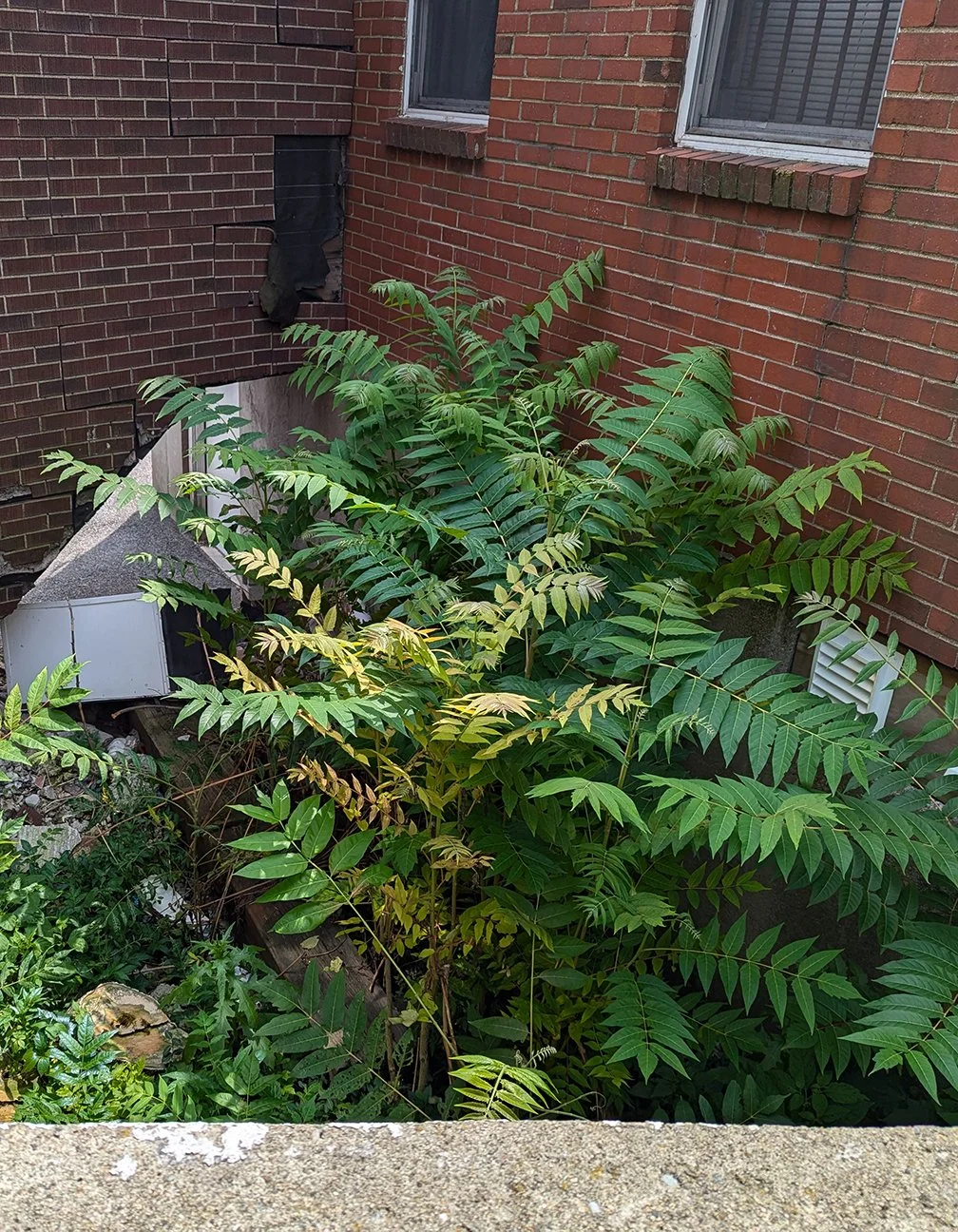
As a phytoacummulator, they can absorb pollutants such as sulphur and mercury, which makes them a valuable ally in reducing toxins. They flourish in ruderal worlds usually considered hostile of life: along roads and railways, in sidewalk cement cracks, in abandoned urban lots. As our climate changes and our ecosystems become hotter or drier or simply different, they will be able to thrive when other trees will not. They have become a powerful symbol for beings that can flourish in what seem like impossible situations and of immigrants being able to thrive in difficult circumstances. Their story is one of complex ecologies with multiple strands that reach into human sensory experience, geopolitical imagination, colonialism, urban decay and revitalization, and so much more.
How to care for tree of heaven?
All the guidance you will find online is not to care for tree of heaven. They grow fast and crowd out native plants. Their roots release toxic chemicals that stop other plants from growing nearby. They is also the main food source for the spotted lanternfly. For these reasons growing a tree of heaven in your yard might not be the best idea.
Tree of heaven does grow all around us in cracks, alleys, abandoned lots, and untended gardens. They are so fierce and tough, they really do not need a lot of care.
What would it look like to choose to not welcome tree of heaven into your garden, but also to not hate or condemn them for being so abundant and fertile?