

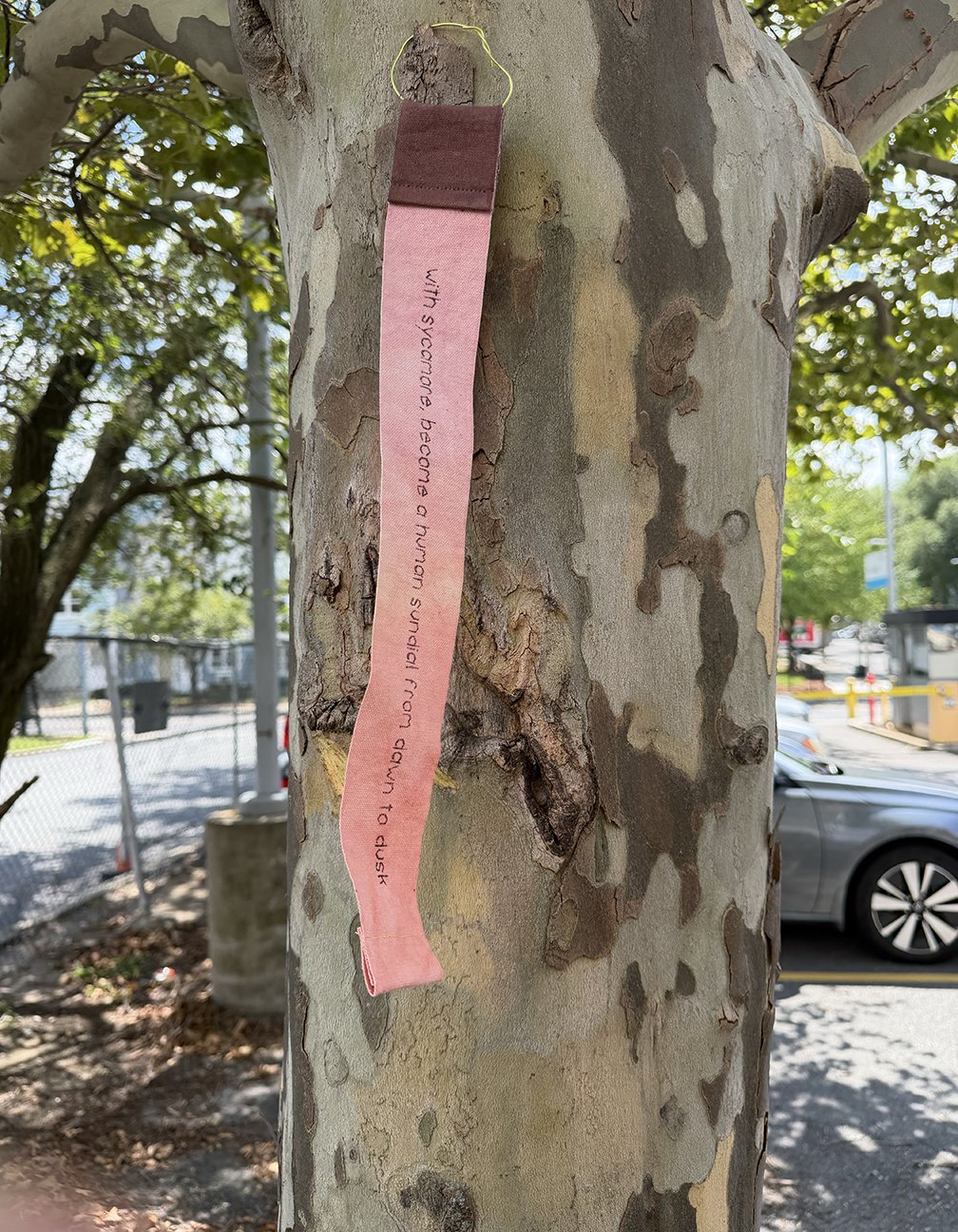
How does sycamore care for us?
Sycamore grow quickly in their first 20 years and then they live for a very long time, up to 500-600 years, becoming ancient guardian trees of our landscapes. Plane tree fossil leaves have been found in the fossil record of the last age of dinosaurs, 100 million years ago, 10s of millions of yers older than many of the familiar trees of our eastern forstest: maples, eels, oaks, and ashes. They have stood as witness on the earth long before humans appeared, watching patiently all that happens during their lives.
Sycamore loves to live close to a near-constant water source. They are also shade intolerant, another reason why the make their home near waterways. In these ecologies, Sycamore helps to control erosion by way of their extensive shallow, spreading root structures, which hold hillsides and banks in place during floods. Colonies of seedlings will grow over small islands and along banks, and can handle being completely submerged during long seasonal flooding.
Sycamore is a dense shade tree and creates slow-decaying leaf litter, which creates rich woodland ecosystems for many beings. Mature trees often develop hollow areas in their trunks which make ready homes for opossum, owls, and other forest creatures. Even the bark creates a home for someone; thick flaking bark is highly textured, providing thousands of little crevices for insect homes.
Sycamore is part of the Platenus family, which includes the more common London Plane tree, a cross between American Sycamore and Oriental Plane. These are the more compact plane trees you see planted on the streets, sidewalks, and parks of urban areas. They can be distinguished by their bark coloration: Sycamore’s bark has a whiteish background, while London Plane tree’s bark has a greenish-yellowish cast. London Planes are valued for their ability to adapt to compact soils, poor air quality, drought, and downpours. Their great mass makes them good at carbon sequestration and their spreading canopy helps to reduce temperatures. But they are not loved by birds, insects, and other beings in the ecosystem, most of whom did not evolve to choose this colonizer tree.
How to care for sycamore?
Water: Sycamore loves water, but should be OK with just rain when they are mature. Newly planted sycamores should be well watered once a week in the growing season.
Mulch: Apply a 2-3 inch mulch ring (away from the trunk) to retain moisture and protect roots from mowers
Prune: Cut off dead, broken, or crossing branches in late winter or very early spring.
Light: Sycamore likes lots of direct full sun ideally 6-8 hours a day.
Soil: Lindens are easy to care for but they do prefer well drained loamy soil. They grow very large, so be careful of roof lines and power lines.