
How does linden care for us?
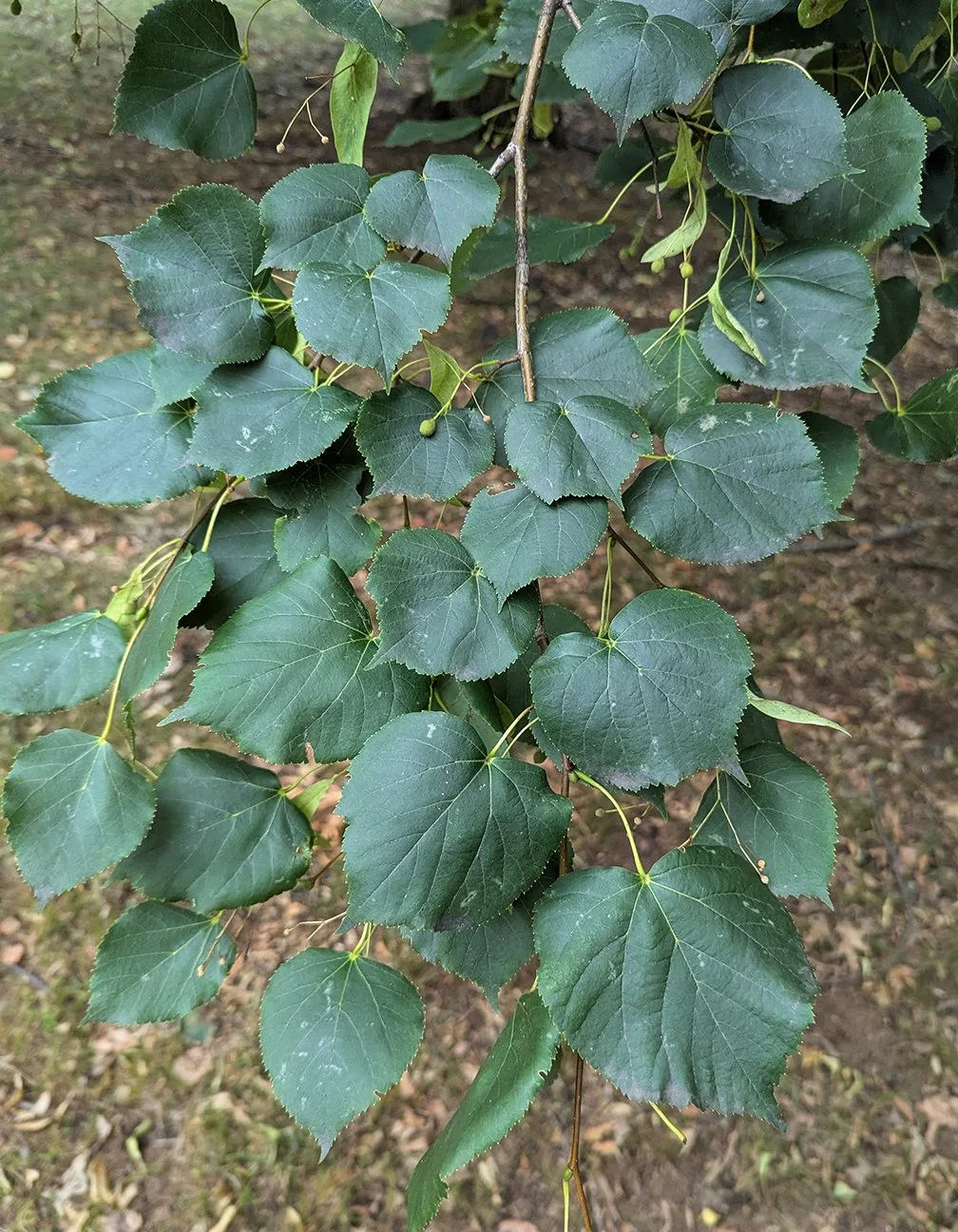
In mid summer Linden’s flowers are plentiful and powerfully sweet smelling, attracting thousands of pollinators, some of whom create a delicious linden honey. In early fall, we notice Linden’s heart shaped leaves. We can see the bracts hanging among the leaves, persisting through the fall even after their work of protecting the flowers is done. Littleleaf Linden, Silver Linden, and American Linden (or Basswood) are common street trees in Greater Boston, known for their drought tolerance, hardiness, and fast growth.
Linden have been traditionally used by herbalists as a heart tonic, helping to reduce cholesterol and high blood pressure, especially if the cause is anxiety driven. Linden relaxes the nervous system and the circulation soothing dryness and inflammation with their high mucilage content. In this way we can see their energy as being expansive in opening up the channels of the body to allow relaxation and flow.
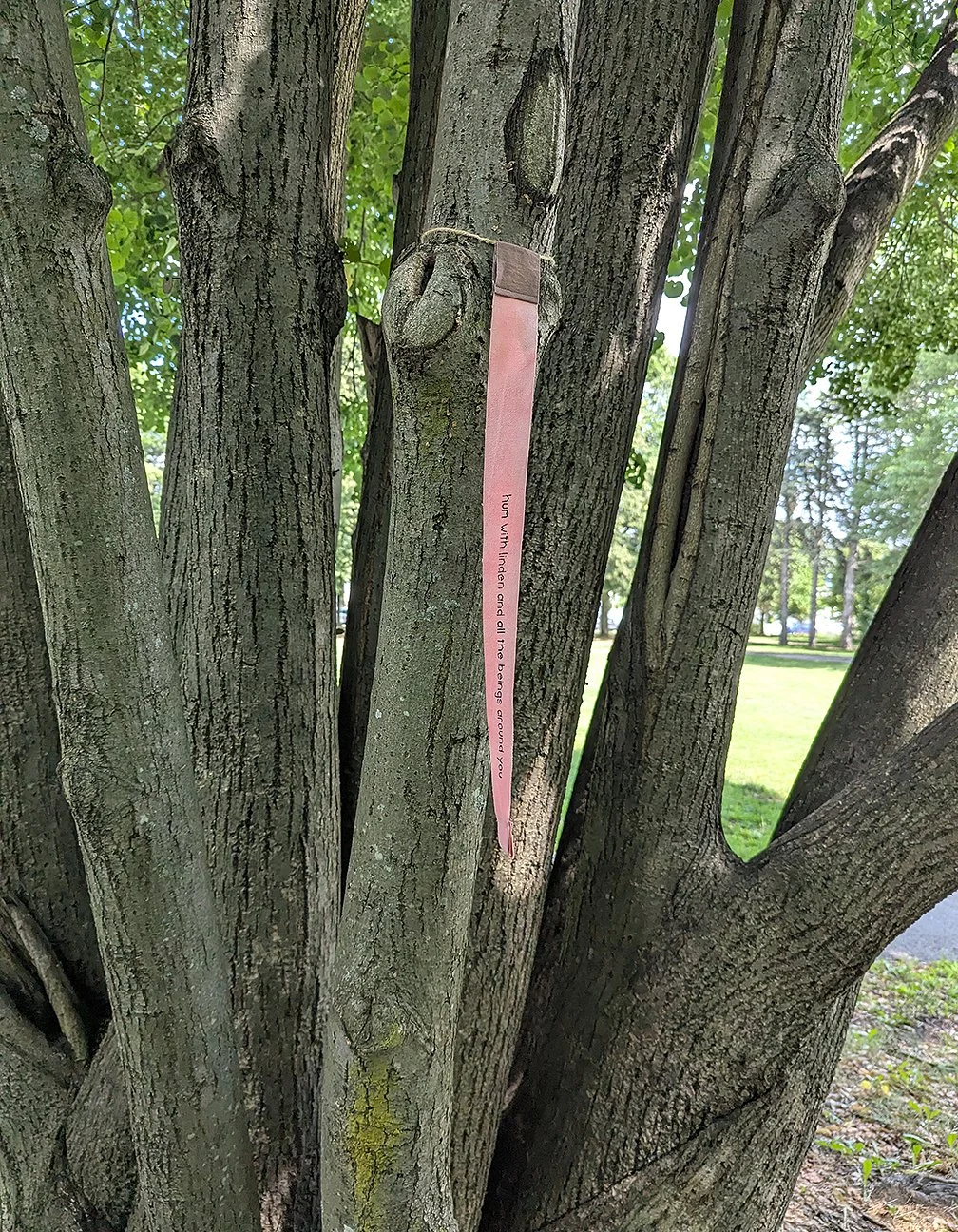
Communities throughout their range assemble to celebrate and commune under Lindens and have for many generations, here in North America, in Europe and Asia. Their enveloping, expansive canopy provides a rich micro ecosystem for so many beings in this place. When we are beneath this canopy, we feel like Linden has made a room for us, a place to gather, be with friends, have a picnic, share stories.
How to care for linden?
Water: Let linden thrive on rain water. Newly planted lindens should be well watered once a week in the growing season.
Mulch: Apply a 2-3 inch mulch ring (away from the trunk) to retain moisture and protect roots from mowers
Prune: Cut off dead, broken, or crossing branches in late winter or very early spring.
Light: Linden likes lots of direct full sun ideally 6-8 hours a day.
Soil: Lindens are easy to care for but they do prefer well drained loamy soil.