
How does gingko care for us?
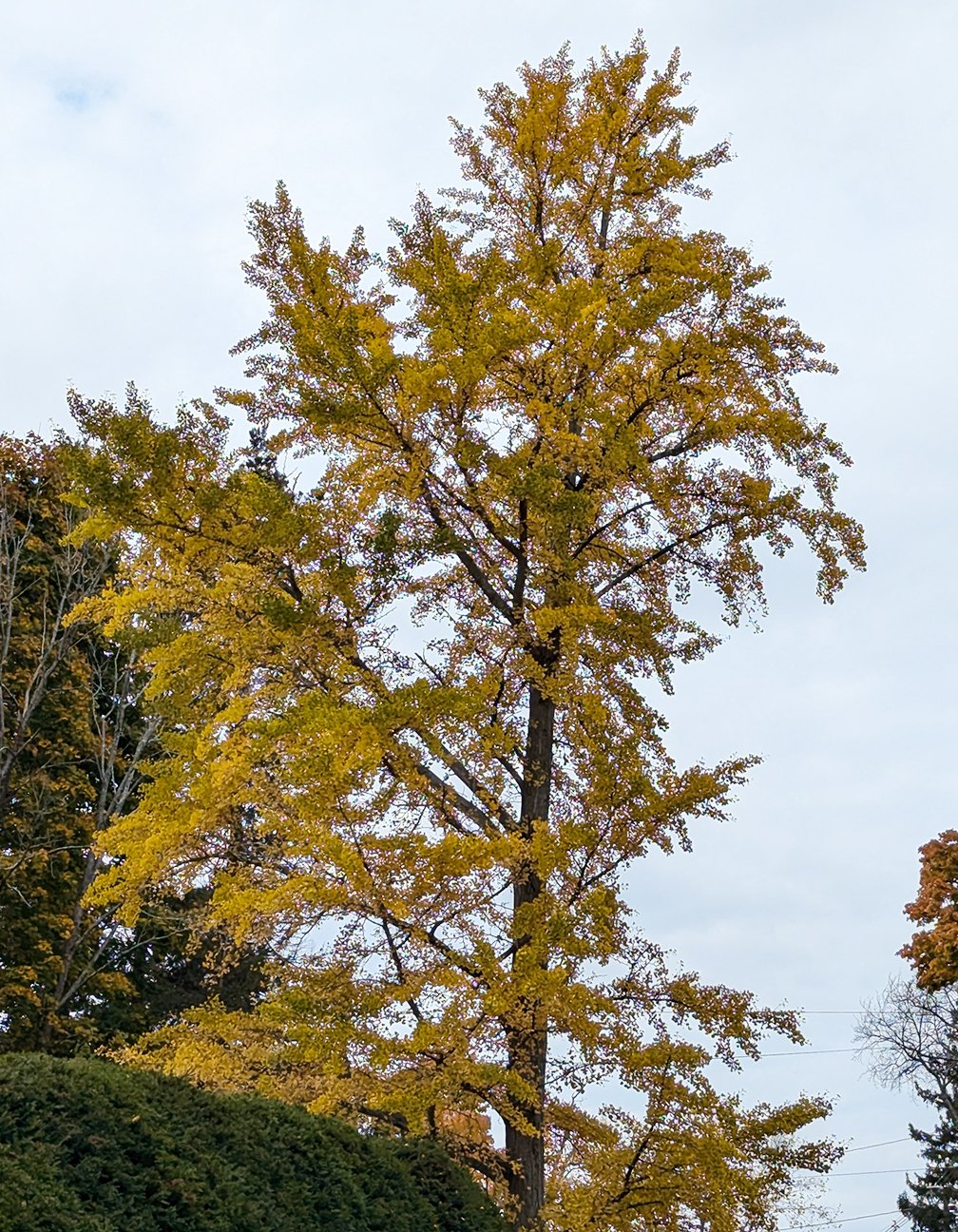
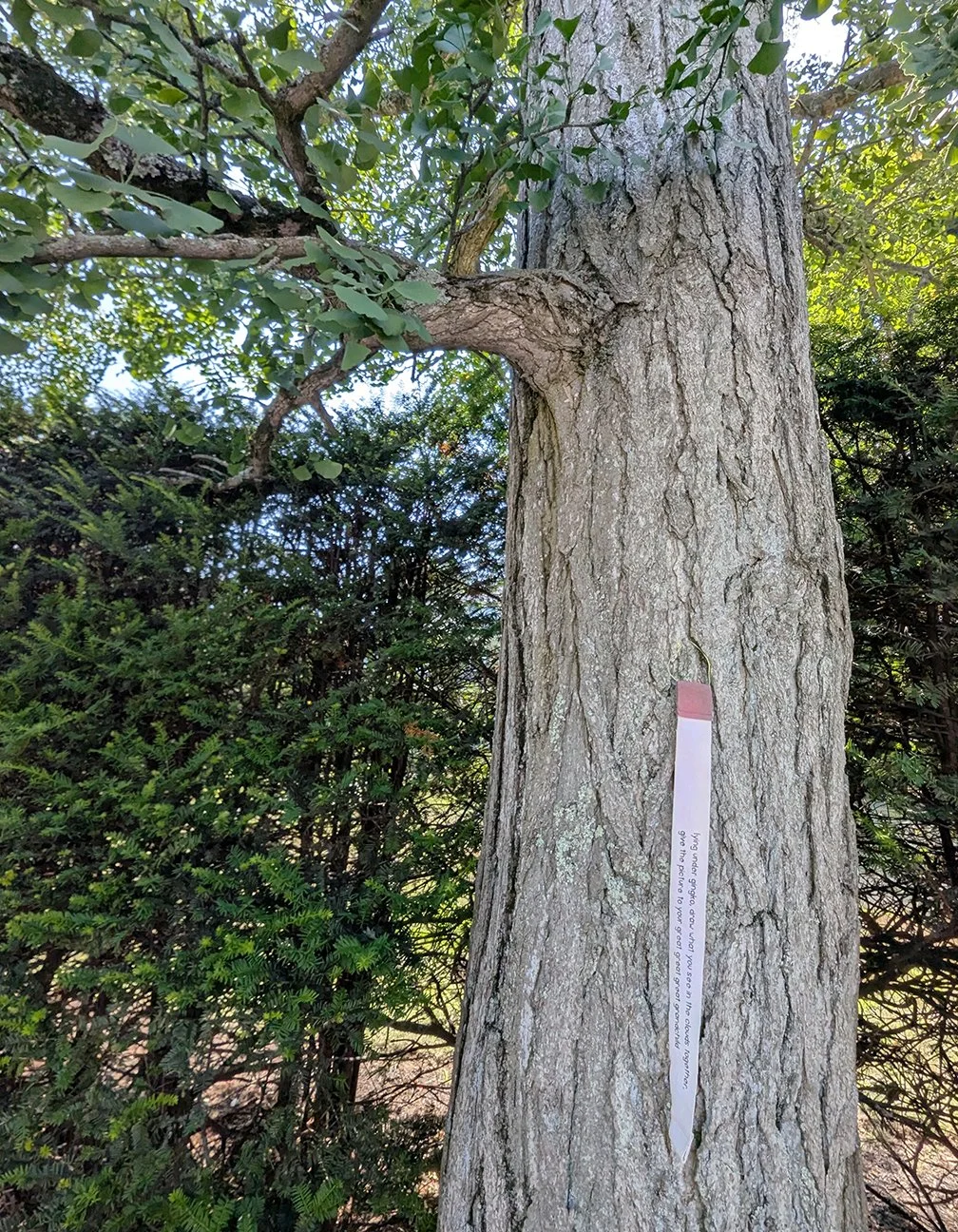
Gingko is a living fossil. First appearing on earth over 290 million years ago, they are a species with no known living relatives, coexisting with the dinosaurs, and essentially unchanged in all that time. Today we find them all over our northeast cities as a common street tree known for their distinctive fan shaped leaves. This durable, long lived tree is very slow growing due to their deep roots, which makes them resistant to wind and snow damage. Gingko’s are quite resilient—their ability to grow and reproduce does not decline over time as it does with other species, a kind of default mode of immortality. Ginkos were often planted near Taoist and Buddhist temples as symbols of hope and longevity. In autumn, their leaves turn bright yellow and are known to all drop in a very short period of time, creating a golden orb at the base of the tree. For all these qualities, Gingko’s relationship to time—past, present, and future— is unique and a lesson for all beings.
How to care for gingko?
Water: Gingkos are resilient but need regular water in times of drought and when they are young.
Mulch: Apply a 2-3 inch mulch ring (away from the trunk) to retain moisture and protect roots from mowers
Prune: Cut off dead, broken, or crossing branches in late winter or very early spring. Make sure to keep one strong central branch
Light: Plant in full sun to partial shade.
Soil: Gingko grows best in well-drained soils