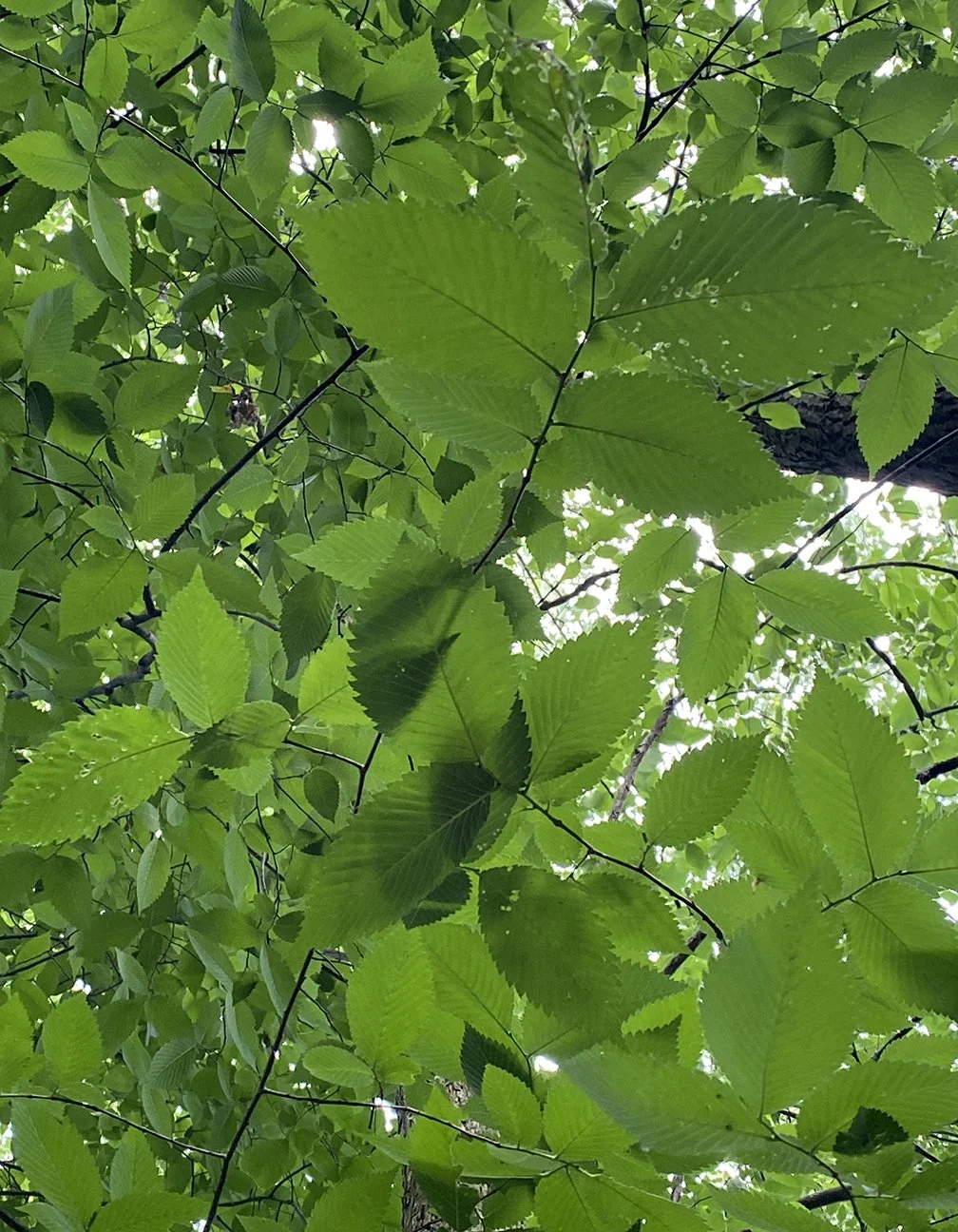

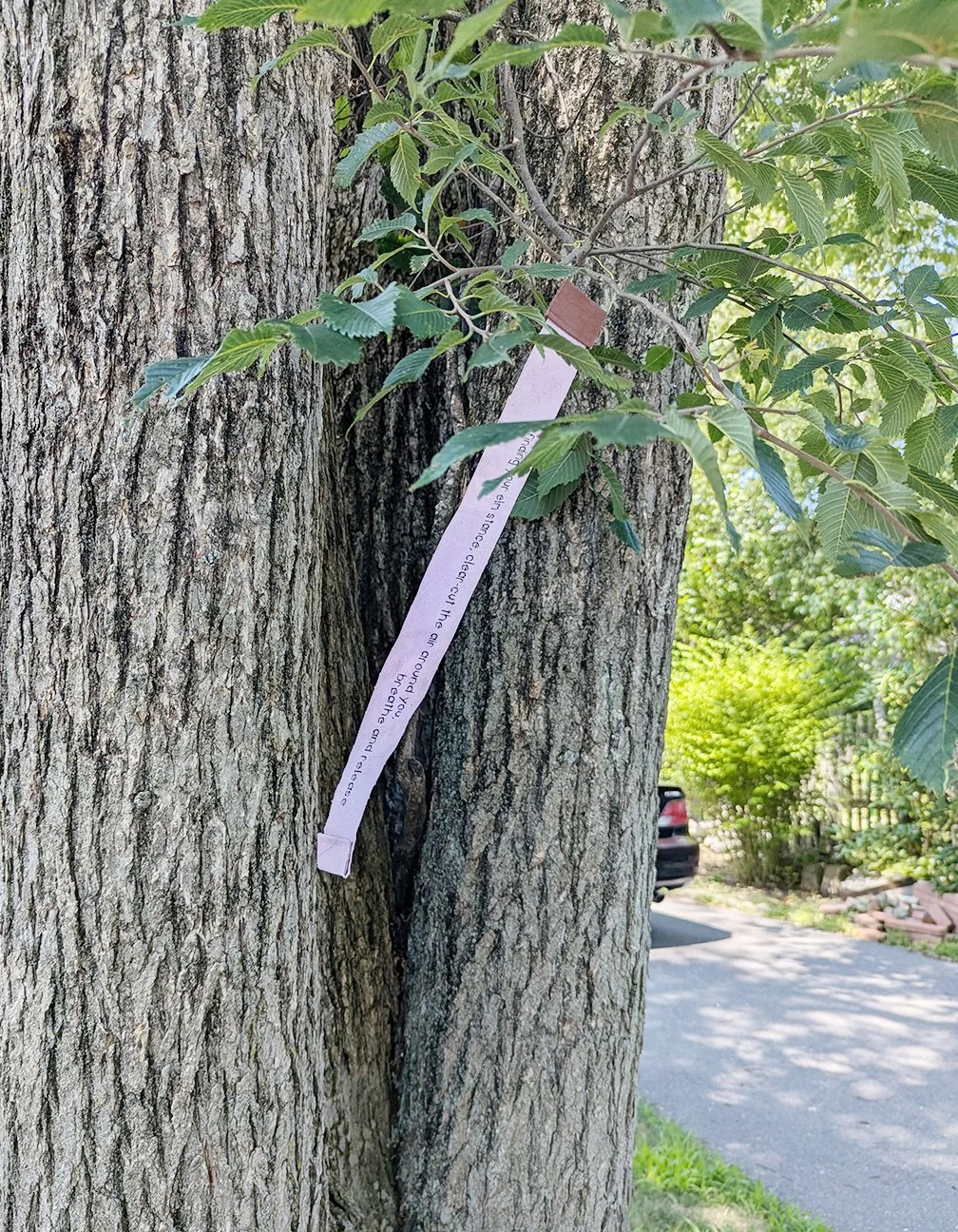
How does elm care for us?
Elm is one of the most common types of trees in North America, so they are a familiar friend. They have been beloved by urban planners and landscape architects as beautiful additions to the landscape who are also quick to grow, provide sheltering shade, tolerate all kinds of air pollution and can adapt to a broad range of soils and climates. Our American Elm, the most commonly cultivated by humans, is resistant to wind damage and requires very little maintenance because their leaves easily mulch into the soil in autumn and their vase-like growth pattern adapts well to high human use environments. They may be able to grow most anywhere, but their true home is in moist, well-drained soils in bottomlands, margins of streams, swamps, and lakes, and floodplains. In these habitats, their shallow wide-spread roots make them an excellent buffer against the winds in open areas. But when they grow in drier, more packed soils, they develop a totally different rooting strategy: a deep taproot that reaches far into the ground for nutrients.
They are also loved by many kin in their homes: turkeys and other birds love their single-wing samsara that contain one delicious plump seed that appears long before most other seeds are available. Dutch Elm disease is a fungus that spreads from root to root as well as two different species of bark beetles. We can still encounter some young elms on our streets and in forests, but it is to the the few large, old American Elms that have survived Dutch Elm Disease that we are looking for clues to how to support them in thriving once again in North America.
Strong and adaptive, ally with Elm when you are seeking clarity and liberation.
How to care for elm?
Water: Let linden thrive on rain water. Newly planted lindens should be well watered once a week in the growing season.
Mulch: Apply a 2-3 inch mulch ring (away from the trunk) to retain moisture and protect roots from mowers
Prune: Cut off dead, broken, or crossing branches in late winter or very early spring.
Light: Linden likes lots of direct full sun ideally 6-8 hours a day.
Soil: Lindens are easy to care for but they do prefer well drained loamy soil.